
Three Sydney strata buildings we priced in November 2026 came to between $2,423 and $5,223 a year for the whole building, or roughly $1.50 to $2.20 for every $1,000 of building sum insured. The bigger the building, the less each $1,000 cost.
Strata insurance is priced building by building, so nobody can give an average that means much. What we can do is show real quotes with every component, explain what moves the price, and show where the money goes. All three quotes are from Strata Community Insurance, the insurer that prices quotes on this site, with $20 million of liability cover and a $1,000 excess.
How much is strata insurance for a small building?
| Duplex, built 2000 | Duplex, built 2010 | Six units, built 2005 | |
|---|---|---|---|
| Lots | 2 | 2 | 6 |
| Building sum insured | $1,100,000 | $1,500,000 | $3,500,000 |
| Total for the year | $2,423.21 | $3,258.28 | $5,222.96 |
| Per lot | $1,211.61 | $1,629.14 | $870.49 |
| Per $1,000 insured | $2.20 | $2.17 | $1.49 |
Real quotes for real buildings, priced on 10 and 11 November 2026. For the two duplexes the construction, sums insured and insurance history were assumed by us. All three were quoted as brick buildings with no pool, lift or other shared facilities and no claims in five years. Our broker fee is not included.
The duplex guide has more on the two-lot examples.
Where does the premium go?
About a third of the total is not premium at all. Here is the $1.5 million duplex, line by line:
| Component | Amount | Share of total |
|---|---|---|
| Base premium (the insurer's price for the risk) | $2,236.71 | 69% |
| Emergency services levy (NSW) | $280.28 | 9% |
| Insurer's administration fee | $242.00 | 7% |
| GST | $251.70 | 8% |
| Stamp duty | $247.59 | 8% |
| Total | $3,258.28 | 100% |
Inside the base premium is the commission the insurer pays the broker. It is paid by the insurer out of the premium, not added on top, and every quote on this site shows the dollar figure, and our broker fee, before you buy.
That matters because commission and fees are the part of a strata premium owners have found hardest to see. Our news story on commissions in strata insurance goes through what the reviews and the regulators have found.
What makes strata insurance cost more or less?
The insurer's Product Disclosure Statement lists what it takes into account: the cover and sums insured, the address, the insurance history and the security features of the building, with the mix of residential and commercial floor space also affecting the premium and the charges on it (SCI-PPW-04/2026, pages 9 and 14). In practice the questions that move a quote are:
- The building sum insured. The cost to rebuild, including demolition, removal of debris and professional fees. It is the biggest single input.
- Where the building is. Exposure to storm, cyclone and flood differs by address, and so do state charges. New South Wales adds an emergency services levy, and North Queensland premiums are shaped by cyclone risk.
- How it is built and how old it is. Wall, roof and floor materials, the year built, and whether it has been rewired or replumbed.
- What is shared. Lifts, pools, gyms, car stackers and electric vehicle chargers.
- Claims history. Claims in the last five years, and whether cover has ever been declined.
- Commercial lots. A shop or restaurant under the units changes the risk and the classification, as our guide to commercial strata insurance explains.
- The excess. A higher excess generally lowers the premium.
- Optional covers. Flood, for example, is an optional cover in this policy and is priced separately.
Why is strata insurance so expensive?
Partly because it insures a whole building for its full rebuilding cost, and building costs have risen. Partly because of where buildings are: the ACCC found the average strata policy in northern Australia cost $8,341 in 2024-25, against $6,719 elsewhere. And partly because of the charges stacked on the premium. In New South Wales, the emergency services levy, GST and stamp duty together added about 24% to the insurer's price and fee in the example above.
The per-lot figure is the one to compare with a house. On the six-unit example it was $870 a lot for the year.
How can an owners corporation keep the cost down?
These are the levers owners corporations commonly look at. None of them is a recommendation for a particular building.
- An up-to-date valuation. A sum insured that is too high costs premium every year. One that is too low leaves owners to fund the shortfall after a loss.
- The excess. Some schemes accept a higher excess for a lower premium.
- Maintenance records. Insurers ask about defects, and the policy excludes damage from lack of maintenance.
- Seeing the commission. Asking what the broker and the strata manager are paid on the policy, in dollars.
- More than one quote. Prices for the same building can differ between insurers. A strata insurance broker can say which insurers were approached.
Every quote shows the base premium, each government charge, the insurer's fee and our commission in dollars.
Get a quoteGeneral information only. Prices are examples from one insurer on the dates shown and are not a guide to what any other building will be quoted.

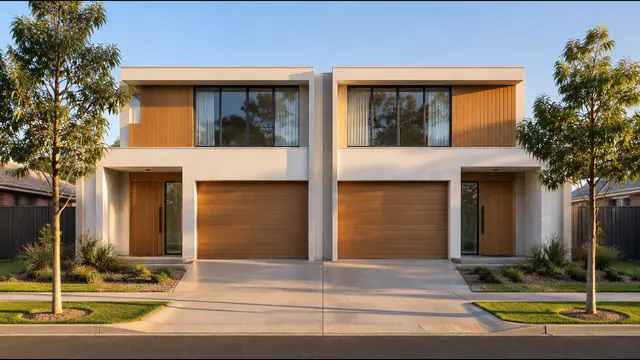 Duplex strata insurance: does a two-lot scheme need it?
 Strata insurance brokers: what they do and how they are paid