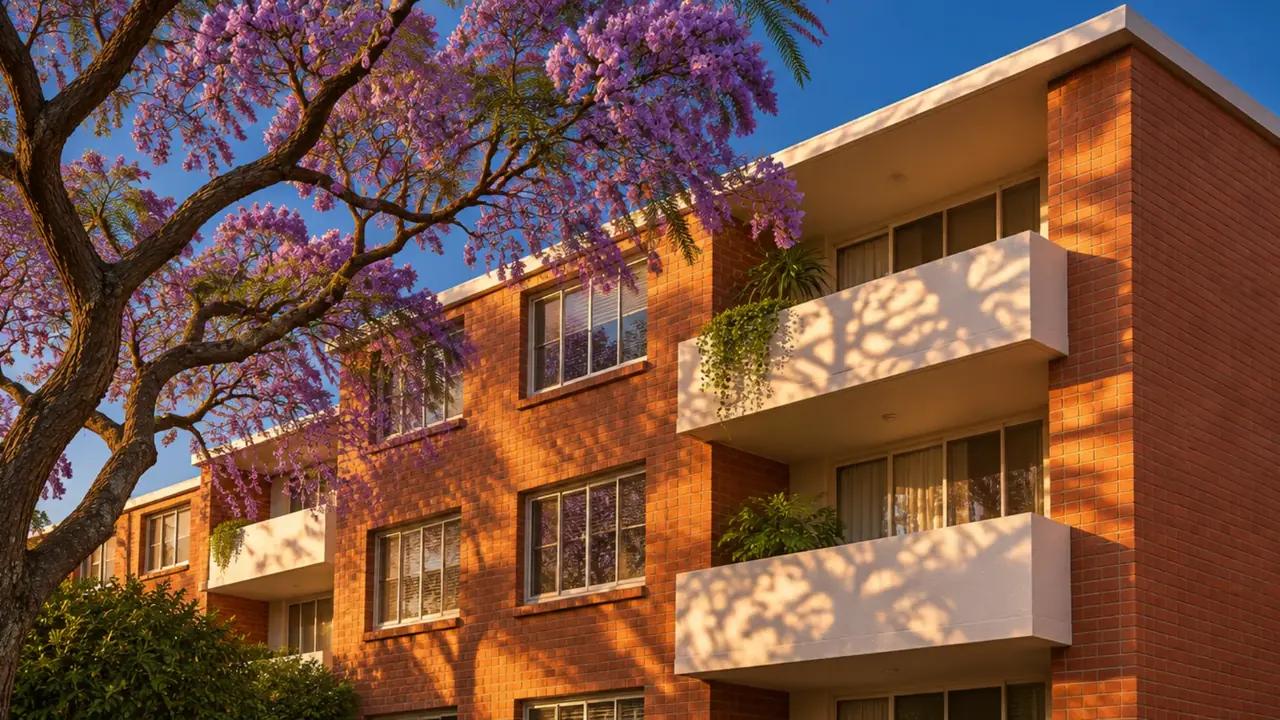
Residential strata insurance is the one policy an owners corporation holds for a strata building that is mostly or wholly homes: a duplex, a row of townhouses or villas, or an apartment block. It insures the building, the common property and the owners corporation's liability to other people, and it is paid for from levies.
The word "residential" matters because insurers rate a building on how it is used. The same building costs more to insure as offices than as homes, and a building with enough business use moves to a different policy altogether. This guide sets out where that line sits, what the residential policy covers, what real buildings were quoted, and what each state requires. The cover facts are quoted from the Strata Community Insurance PDS and Policy Wording (SCI-PPW-04/2026), one of the wordings behind the quotes on this site.
What is residential strata insurance?
It is strata insurance for a scheme whose lots are homes. The owners corporation (a body corporate in Queensland and Tasmania, a strata company in Western Australia) buys one policy for the whole scheme. That policy insures the building for its rebuilding cost, the shared contents in common areas, and the owners corporation's legal liability if someone is hurt on common property.
It applies whatever the size: a two-lot duplex, townhouses or a block of units, or a high-rise. Our guide to what strata insurance covers goes through every section of the policy with page numbers.
When does a building stop being residential?
When enough of its floor space is used for business. Insurers classify a building by the share of floor space that is homes and the share that is commercial, and the policy says the classification sets the price and the taxes on it:
"We will classify Your risk based on characteristics such as the percentage of floorspace which is used for residential and commercial purposes. This classification will determine the premium, taxes, duties and levies applicable"
SCI-PPW-04/2026, page 14
One insurer on our panel draws the line at 80%: a building that is 80% or more residential by floor space stays on its residential strata policy, and one with a larger commercial share goes on its commercial strata policy, which has its own PDS (Hutch Commercial Strata Target Market Determination, HCS1). So a block of flats with one small shop at street level can still be a residential strata risk, while shops under a single floor of apartments may not be. Our guides to mixed-use buildings and commercial strata insurance cover the other side of the line.
What does residential strata insurance cover?
The same sections whether the scheme is two lots or two hundred. In the policy quoted here the owners corporation selects from eleven (page 6). The ones most residential schemes take:
| Section | What it covers | Page |
|---|---|---|
| Insured property | Loss or damage to the building and common area contents, with extras such as temporary accommodation and loss of rent | 6, 25 |
| Liability to others | The owners corporation's legal liability for death, injury or property damage | 7 |
| Voluntary workers | Set benefits for a volunteer injured doing work for the scheme | 7 |
| Fidelity guarantee | Fraudulent misappropriation of the scheme's funds | 7 |
| Office bearers' liability | Legal liability of committee members for a wrongful act | 7 |
| Lot owners' fixtures and improvements | Fixtures an owner has added inside their lot, up to 10% of the sum insured | 8 |
The building is more than walls and a roof. In this policy it includes fences, gates, paths and roadways, retaining walls, in-ground swimming pools and spas, built-in plant and appliances, and permanently attached electric vehicle chargers and solar panels (pages 21 to 22).
What does it not cover for the people who live there?
Their own things. Lot owners' contents are outside the policy, and in this wording that includes the carpets, rugs and floating floors inside a lot as well as furniture, appliances and personal effects (pages 22 and 23). Tenants' property is outside it too.
That is why an owner who lives in their unit commonly holds a separate contents policy, and an owner who rents the unit out commonly holds landlord insurance. Neither replaces the strata policy: the building itself stays with the owners corporation. Quick Strata is a Gary brand, and Gary's guide to strata insurance for unit owners sets the three policies side by side. Gary does not quote contents or landlord cover for a strata unit online yet, but a Gary broker can arrange it with an insurer directly: contact Gary.
How much does residential strata insurance cost?
It is priced building by building. These are real quotes for Sydney buildings, priced in November 2026 with $20 million of liability cover:
| Building | Sum insured | Quoted for the year |
|---|---|---|
| Duplex, two lots | $1.1 million | $2,423.21 |
| Duplex, two lots | $1.5 million | $3,258.28 |
| Block of six units | $3.5 million | $4,791.56 to $8,549.82 across five insurers |
The duplexes were priced by Strata Community Insurance on 11 November 2026 with a $1,000 excess. The six-unit block was priced by all five insurers on our panel on 17 November 2026. Totals include the NSW emergency services levy, GST, stamp duty and insurer fees, before our broker fee.
Per lot, the Strata Community Insurance quotes came to between $870 and $1,629 for the year, and the smaller buildings cost more per lot. Our guide to how much strata insurance is itemises every charge, and comparing strata insurance quotes shows why the five quotes for the six-unit block were 78% apart.
Is residential strata insurance cheaper than commercial?
For the same building, it was. We priced one six-lot, $3.5 million building in Strathfield as six homes and again as six offices, on the same day. As homes it came to $4,787 to $5,223 a year. As offices it came to $6,629. Part of the difference was the insurer's price, and part was the NSW emergency services levy, which went from $418 to $974 when the building was rated commercial. All five versions of that building are in our guide to what commercial strata insurance costs.
What strata insurance does a residential scheme need by law?
Each state sets its own minimum. Building insurance for the full rebuilding or replacement value and public liability cover are the two requirements common to all of them, with exceptions for some small schemes.
| State | Minimum public liability | Small schemes |
|---|---|---|
| New South Wales | $20 million | A two-lot scheme with physically detached buildings can opt out of building insurance by unanimous resolution |
| Victoria | $20 million | Two-lot subdivisions are exempt from the owners corporation insurance requirements |
| Queensland | $10 million | On a standard format plan an owner insures their own building when it shares no wall with another |
| Western Australia | $10 million | In a survey-strata scheme each owner insures the buildings on their own lot |
| South Australia | $10 million | Fidelity guarantee cover is compulsory in most cases as well |
| Tasmania | $10 million | No exemption for small or two-lot schemes |
Each row is a summary of that state's guide, which quotes the Act and gives its sources. The legislation is the authority.
Can a residential strata building be quoted online?
Most can. You describe the building on one form and get a strata insurance quote from each insurer on our panel that prices it, each shown with its total, its PDS and its Target Market Determination. How it works lists what the form asks. Some buildings go to a broker instead of being priced on the spot, for example one with a claim in the last five years or with combustible cladding. For those you can contact us directly.
Enter the building once. Up to five strata insurers price it, each shown with its PDS.
Get a quoteGeneral information only. It does not take into account your objectives, financial situation or needs. This guide summarises one insurer's policy (edition 04/2026) and leaves out terms, conditions and limits that may matter to your scheme. Read the PDS and TMD for any policy before deciding.
 What does strata insurance cover?
 How much is strata insurance? Real quotes, line by line
 Compare strata insurance quotes: five insurers, one building
 Townhouse and unit block insurance: who insures what